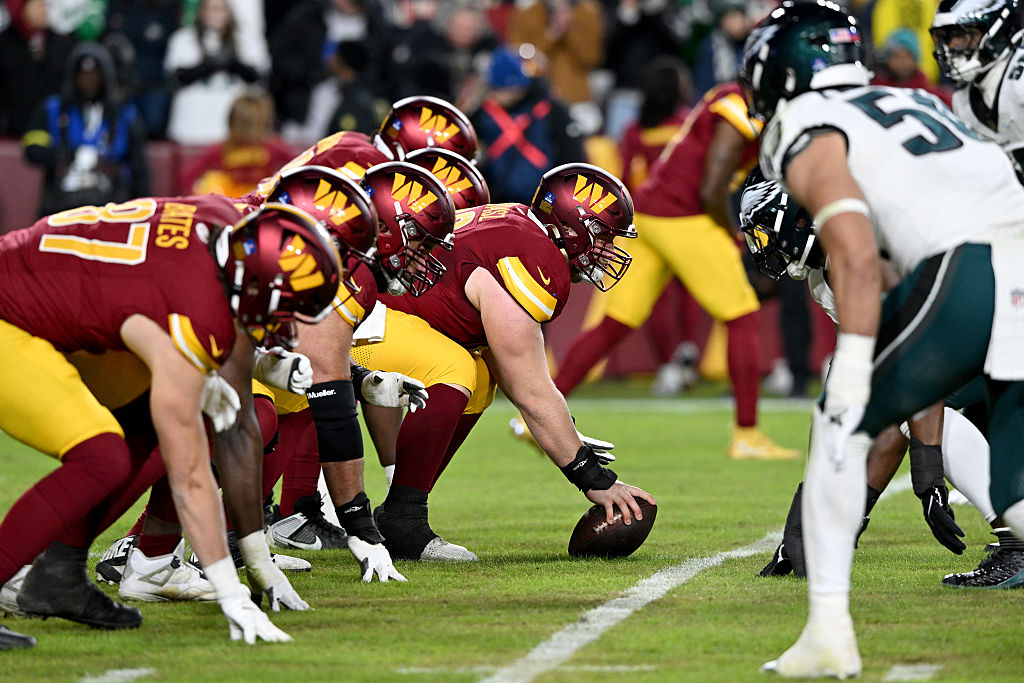
Washington had a chance to force overtime in the final minute and came up short in a 24-22 loss in Philadelphia.
The frustrating part is, the box score gives you plenty of reasons to think they should’ve had a better shot at this one. The Commanders ran more plays, held the ball longer, doubled Philadelphia up in first downs and didn’t turn it over once.
At the end of the day, it still wasn’t enough. One too many missed opportunities, one too many explosive plays allowed and one late conversion they couldn’t cash in.
Here’s the Commanders-Eagles opener by the numbers.
Final Score and Quarterback Numbers
Washington struck first and led 3-0 after the opening quarter before Philadelphia answered with 14 points in the second. The Commanders went into halftime down 14-9, were shut out in the third quarter and then made their push late with 13 fourth-quarter points.
Washington’s touchdowns came from Jacory Croskey-Merritt, Stefon Diggs and Antonio Williams. Drew Stevens connected from 55 yards but finished 1-for-2 on field-goal attempts, leaving another scoring opportunity on the field.
Jayden Daniels finished 18-of-34 passing for 164 yards, two touchdowns and no interceptions, good for an 85.9 passer rating. He also carried five times for 31 yards.
Daniels was sacked once for one yard, which is why Washington officially finished with 163 net passing yards despite Daniels throwing for 164. It wasn’t a disastrous performance, but it wasn’t particularly sharp either. He averaged just 4.8 yards per attempt, completed barely more than half his passes and spent much of the afternoon trying to manufacture offense a few yards at a time.
Still, he gave Washington a chance. Daniels found Diggs for a 10-yard touchdown with 10:04 remaining, cutting Philadelphia’s lead to 17-16. Then, with Washington trailing 24-16 late, he led a 12-play, 63-yard drive that ended with a one-yard touchdown pass to Williams with 1:01 remaining.
The ensuing two-point conversion failed, leaving Washington two points short.
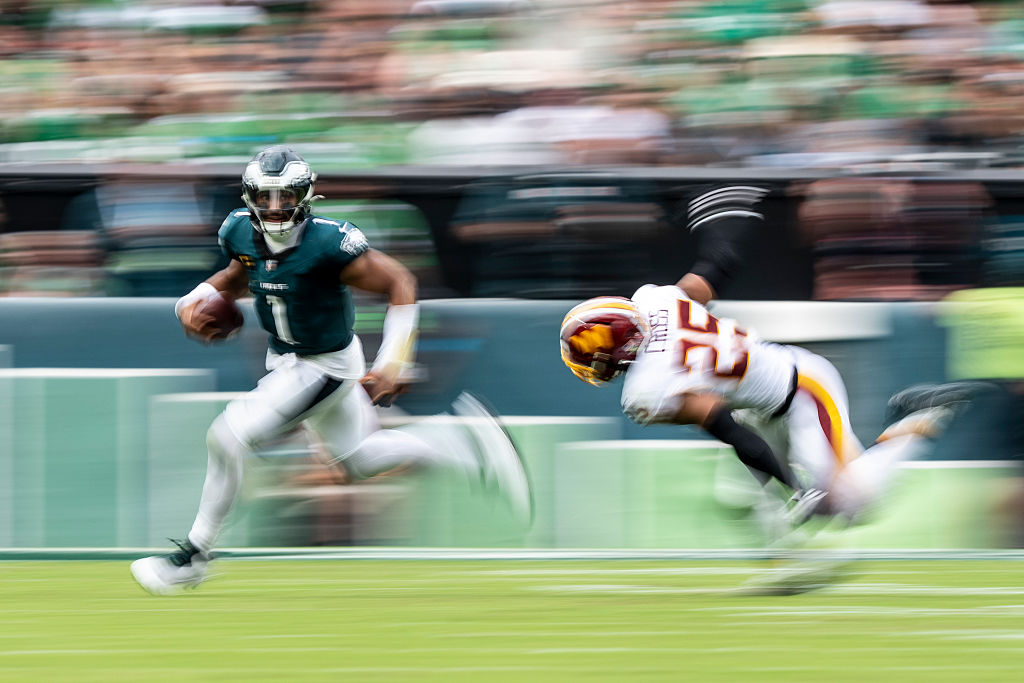
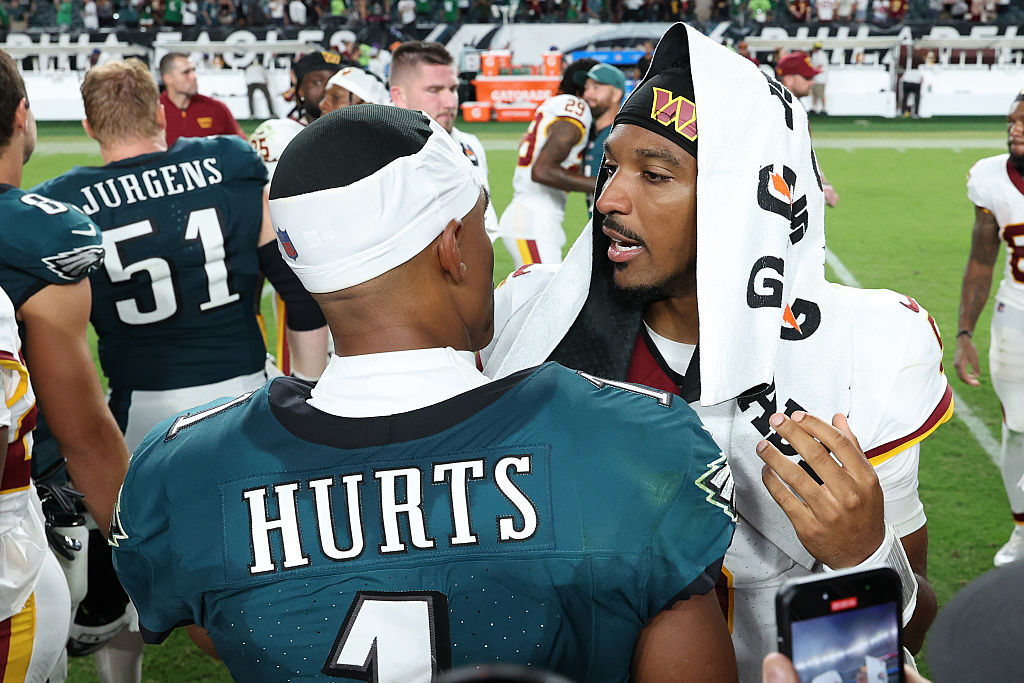
Jalen Hurts, meanwhile, finished 14-of-25 passing for 203 yards, three touchdowns and no interceptions, good for a 122.2 passer rating. He also rushed seven times for 46 yards.
Hurts was sacked three times for 21 yards, leaving Philadelphia with 182 net passing yards as a team. The difference was efficiency. Hurts averaged 8.1 yards per pass attempt and consistently made Washington pay when the Eagles created an opening.
His three touchdown passes went for 17 yards to Dallas Goedert, nine yards to Dontayvion Wicks and 43 yards to Goedert. Philadelphia didn’t need Hurts throwing the ball 40 times. The Eagles simply did more damage when they did put it in the air.
Where Philadelphia Hurt Washington
The Commanders actually ran the ball reasonably well, finishing with 132 yards on 32 carries for 4.1 yards per attempt.
Croskey-Merritt led Washington with 16 carries for 63 yards and a touchdown. Daniels added 31 yards on five carries, Rachaad White finished with 22 yards on seven carries and Kaytron Allen added 16 yards on four attempts.
The problem was that Washington rarely created the kind of chunk gains Philadelphia did.
The Commanders’ longest rush went for 14 yards. Philadelphia, meanwhile, got a 42-yard run from Saquon Barkley, who finished with 83 yards on 15 carries. Hurts added another 46 yards on the ground, helping the Eagles finish with 136 rushing yards on 25 attempts.
The same problem showed up through the air.
Antonio Williams led Washington with four catches for 64 yards and a touchdown. Diggs caught four passes for 55 yards and a touchdown on nine targets, while Terry McLaurin was held to just two catches for 14 yards on four targets. Williams provided Washington’s biggest play in the passing game with a 33-yard reception.
Philadelphia’s explosives were bigger.
Goedert finished with four receptions for 77 yards and two touchdowns, averaging 19.3 yards per catch. Wicks caught only two passes, but they went for 73 yards and a touchdown, including a 64-yard reception. DeVonta Smith added three catches for 53 yards.
Goedert’s second touchdown, a 43-yard score with 6:12 remaining, pushed Philadelphia’s lead to 24-16 and ultimately gave the Eagles enough breathing room to survive Washington’s final drive.
The Box Score Was Weird
This is where the game gets frustrating for Washington.
The Commanders finished with 20 first downs to Philadelphia’s 10, ran 67 offensive plays to the Eagles’ 53 and held the ball for 33:20 compared with Philadelphia’s 26:40.
Washington also converted both of its fourth-down attempts, scored touchdowns on all three trips into the red zone and didn’t turn the football over.
Those numbers make it look like the Commanders controlled large stretches of the afternoon. In some ways, they did.
But Philadelphia finished with 318 total yards to Washington’s 295 and averaged 6 yards per play. The Commanders averaged 4.4.
That’s really the story.
Washington kept needing long drives, repeated conversions and clean execution to move the football. Philadelphia could erase chunks of the field in one snap.
Third down didn’t help, either. Washington went just 5-of-15, while Philadelphia finished 6-of-14.
The Commanders had more possessions that required them to string together seven, eight or nine good plays in a row. One missed block, one inaccurate throw or one negative play could kill a drive.
Philadelphia had more room for error because its explosive plays kept shortening the field.
Three Numbers That Decided the Game
6.0 vs. 4.4
This might be the stat that explains Sunday better than anything else.
Philadelphia averaged 6 yards per offensive play. Washington averaged 4.4.
The Commanders had more first downs, more plays and more possession. The Eagles had more punch.
203
Hurts threw for 203 yards on only 25 attempts.
He wasn’t asked to carry Philadelphia’s offense with volume. He just needed to capitalize when Washington gave him opportunities.
Three touchdowns and 8.1 yards per attempt did exactly that.
0
Neither team turned the football over.
That meant Washington never got the short field or extra possession that could have helped erase Philadelphia’s advantage in explosive plays.
In a game ultimately decided by two points, one takeaway could have changed the afternoon.
Washington drove 63 yards in 12 plays late in the fourth quarter and got into the end zone with a chance to tie the game. The conversion failed, and that was that.
There will be plenty for the Commanders to clean up before Week 2, but this wasn’t a game where Washington got run out of the building. They had opportunities, moved the football and gave themselves a chance late.
Conor Forrest is the Editor-in-Chief and Senior NFL Insider at SportsJourney.com, where he covers the Washington Commanders and the league at large. A Northern Virginia native and George Mason University graduate, his work has appeared in FanSided, NBC Sports Washington, Heavy.com, and The Fourth Estate. He is also the host of the “After Further Review” podcast, reaching a global audience with his analysis and storytelling.








Leave a Reply