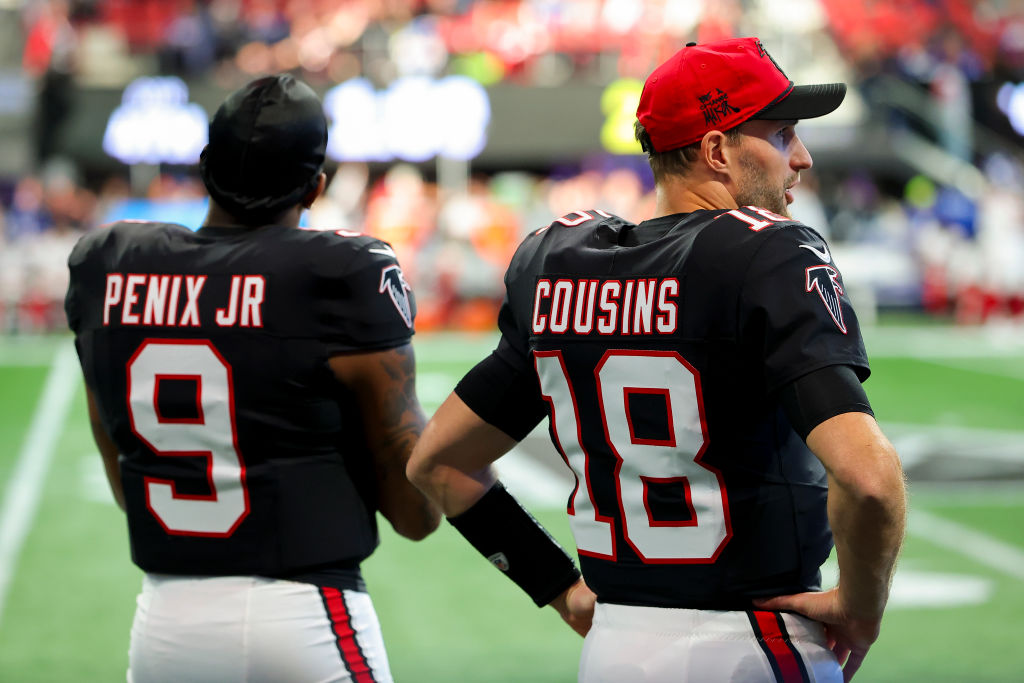
In the new season of Netflix’s Quarterback, veteran signal-caller Kirk Cousins shared his honest reaction to the Atlanta Falcons’ decision to draft Michael Penix Jr. just weeks after signing Cousins to a lucrative free-agent deal. Cousins expressing frustration at not being told the Falcons were targeting a quarterback in the first round:
“It felt like I had been a little bit misled or certainly if I had had the information around free agency, it would have affected my decision,” said Cousins. “I had no reason to leave Minnesota, as much as we loved it there if both teams were drafting a quarterback high.”
It’s a fair reaction. Cousins made a major life decision—moving his family, committing to a new franchise, and signing a four-year, $180 million contract—only to learn after the ink dried that Atlanta viewed him as a bridge, not the future. But here’s the other side of the coin: it was also entirely fair for the Falcons to draft Michael Penix Jr.
The Falcons Had Every Reason to Protect Their Future
Cousins may be a proven starter but was also coming off a torn Achilles at age 35. He’s a short-term answer in a league that lives and dies on long-term quarterback stability. For all of Cousins’ accomplishments—four Pro Bowls, a career passer rating of 97.4, and over 40,000 passing yards—he has never been mistaken for a franchise savior.The Falcons, meanwhile, held the No. 8 overall pick in a strong quarterback draft. When they selected Penix, they weren’t making an emotional judgment—they were executing a strategic one. Cousins gives them a professional floor. Penix, in their eyes, might offer a championship ceiling.
No NFL Team Owes a Free Agent Its Draft Board
There’s a harsh truth about NFL business: teams and players both look out for themselves first. Cousins is no stranger to that reality. He’s famously maximized his earnings through calculated decisions—betting on himself with franchise tags in Washington, then landing a fully guaranteed deal in Minnesota. He understood the game when it worked to his benefit. The Falcons simply played it too. Could Atlanta have been more transparent? Perhaps. But when you’re on the clock and a quarterback you graded highly is still there, passing on him just to avoid hurting someone’s feelings isn’t good management. That’s emotional decision-making in a results-driven league.
Michael Penix Jr. Is More Than Just Insurance
The Falcons didn’t reach for Penix—they took a swing on a player with elite traits: a cannon arm, veteran maturity, and poise under pressure. Penix was a Heisman finalist and led Washington to the national title game. Despite his injury history, he represents a calculated upside bet—one that could define Atlanta’s future.
And who better to help Penix transition than a consummate pro like Cousins?
If Cousins plays well and stays healthy, the Falcons have a great problem: two capable quarterbacks and options. If he falters or retires within two years, Penix is already marinating in the system, ready to step in. That’s smart roster-building.
Feelings vs. Football
There’s room for empathy in all this. Cousins uprooted his life expecting clarity and got surprises instead. But NFL franchises don’t operate to protect veteran comfort—they plan for what’s next.Atlanta didn’t sign Cousins instead of drafting a quarterback. They signed Cousins and drafted one—because they could, and because they should.If Penix hits, they won’t regret it. And neither should Cousins—because in the long run, everyone’s just trying to win.
Dujunnea Bland is a NFL and NHRA reporter for SportsJourney. Bland was a New Orleans Saints Reporter and Content Producer for About.com and a contributor at USA TODAY SMG's Redskins Wire. You can follow him on Twitter @NotBland21







Leave a Reply