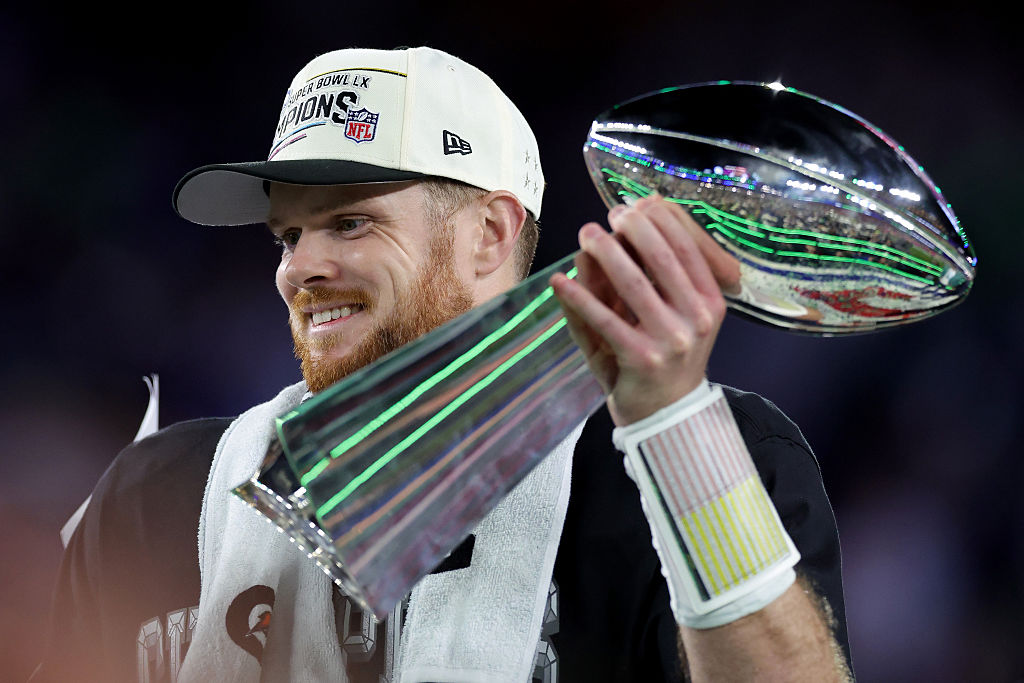
The Seattle Seahawks delivered a commanding performance to claim their second Super Bowl championship, defeating the New England Patriots 29-13 in Super Bowl LX on Sunday at Levi’s Stadium in Santa Clara, California.
Under head coach Mike Macdonald, Seattle’s defense — nicknamed the “Dark Side” — overwhelmed Patriots quarterback Drake Maye from start to finish. The unit recorded six sacks, forced three turnovers (including two interceptions and a fumble), and held New England to 13 points, most coming late in garbage time. The decisive blow came in the fourth quarter when linebacker Uchenna Nwosu intercepted a pass under pressure from cornerback Devon Witherspoon and returned it 45 yards for a touchdown, sealing the rout and bringing the Lombardi Trophy back to Seattle.
Seattle’s dominance stemmed from excelling in the three fundamental pillars of modern football: possessing a capable quarterback, generating relentless pressure on the opposing quarterback, and effectively protecting their own passer. A clear theme runs through all three — elite execution across phases.
Sam Darnold arrived in Seattle with the expectation of operating in a complementary role, managing games from a position of security. He exceeded those hopes. Despite facing consistent pressure from New England’s defense, Darnold stepped up as he had all season. When opportunities arose, he pushed the ball downfield against a stout Patriots secondary and, crucially, committed no catastrophic errors. This steadiness allowed the Seahawks’ ground attack and elite defense to dictate the outcome.
The pass rush proved overwhelming. From the opening drive, Seattle’s secondary disguised blitzes that scrambled New England’s protection assignments, leading to early pressures and a sack by Witherspoon. The defensive line then took over, with Derick Hall and Byron Murphy II each notching two sacks, while Witherspoon and rookie Rylie Mills contributed to the tally. The unit harassed Maye relentlessly, collapsing pockets, eliminating open receivers, and forcing hurried decisions or scrambles. For much of the game, Maye had few viable targets, preventing the Patriots from establishing any rhythm.
On the offensive side, protection enabled the Seahawks’ run game to flourish despite the challenges posed to Darnold. The line created sufficient pockets for play-action and, more importantly, opened lanes for running back Kenneth Walker III, who earned Super Bowl MVP honors. Walker carried 27 times for 135 yards, displaying patience, vision, and explosiveness with runs of 30 and 29 yards. His performance dismantled a Patriots run defense that had limited postseason opponents, controlling the clock and keeping Maye on the sideline.
This blueprint extended through the playoffs. After a first-round bye, Seattle applied the same approach in three dominant victories, leveraging superior quarterback pressure, stout protection, and reliable play under center that allowed offensive standouts like Jaxson Smith-Njigba to post career-high numbers. Ranked the NFL’s top defense during the regular season, the unit elevated its play on the grandest stage.
The triumph avenged the Seahawks’ painful Super Bowl XLIX loss to the Patriots more than a decade earlier and established Seattle as a formidable force. With a deep and talented defensive line, Walker’s dynamic presence, and Darnold’s veteran steadiness, the Seahawks have built a roster poised for sustained contention in the seasons ahead.











Leave a Reply