The Washington Commanders’ offseason came into sharper focus this week as the NFL Scouting Combine concluded inside Lucas Oil Stadium, where NFL insider Lake Lewis Jr. spent the week tracking the organization’s next steps.
While prospects rotated through podium sessions and position drills, the most telling developments for Washington came during open media availability with general manager Adam Peters and head coach Dan Quinn.
“You can look across the board — we’re still building the depth,” Peters said. “Because of the nature of how we’ve done a lot of shorter-term contracts, there’s going to be some turnover until we can keep building a foundation through the draft and through longer-term deals. There are a lot of places we can get better in every room — whether it’s the high end, the starters, or the depth. I think this draft and this free agency line up with what we’re looking for. I think we’ll have a chance to really get a lot better.”
That message was measured but fans have a lot to take from both messages: Washington road to constructing something sustainable involves moving beyond the short-term patchwork phase, and to see a solid draft-centered foundation to build from.
Quinn expanded on that vision, particularly when discussing defensive roles and schematic flexibility.
“A role could mean moving from an off-the-ball backer to an on-the-ball backer. It could be a safety who has nickel flexibility,” Quinn said. “Those are the things we have a vision for — now we have to go put it into action. By the time we get to September 1, you’ll see more of that. Offensively, some concepts may come out of different personnel groups. We might call a route the same thing, but it could be different people in different spots.”
The emphasis on versatility is telling. Hybrid defenders who can shift responsibilities without substituting fit directly into that blueprint.
Holding the No. 7 overall pick, Washington has options — and leverage. Prospects such as Caleb Downs, Sonny Styles, and Ruben Bain Jr. represent the type of defensive flexibility Quinn described throughout the week. Each offers positional versatility and scheme adaptability, traits that align directly with the coaching staff’s emphasis on interchangeable roles. If one of those defenders is sitting on the board when Washington goes on the clock, the fit would be both philosophical and practical.
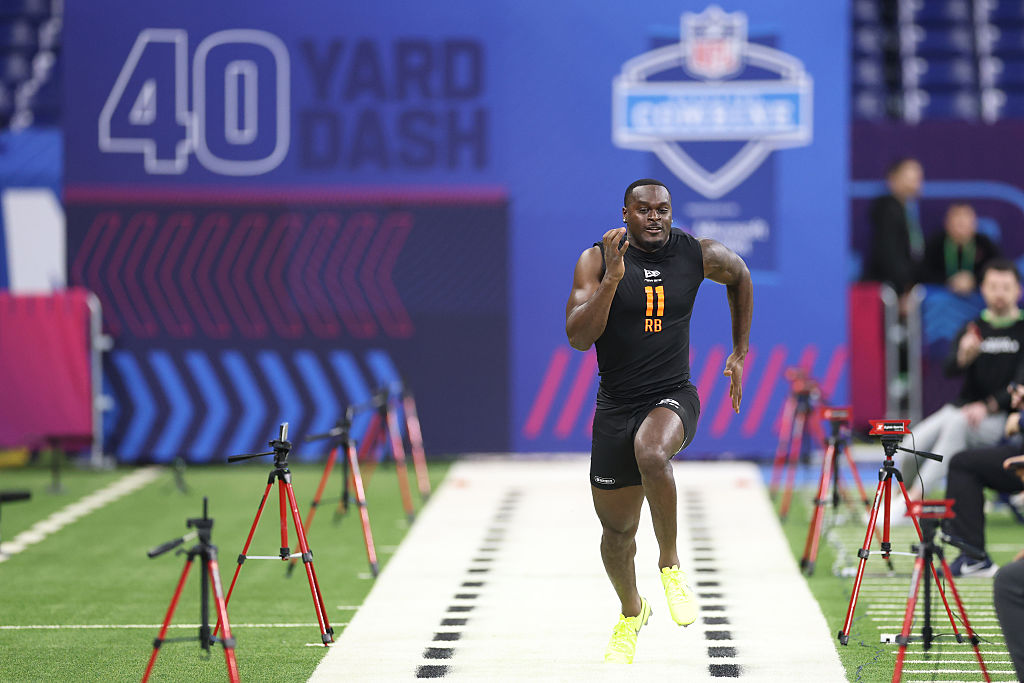
On the offensive side, Notre Dame running back Jeremiah Love was among the prospects who generated buzz during workouts. His explosiveness adds intrigue to the conversation, particularly as the league continues to re-evaluate the value of dynamic, multi-dimensional backs who can impact both the run and pass game. Whether Washington views that as a luxury or a necessity will be one of the more fascinating storylines heading into draft night.
The larger question now is strategic: stay at seven and select the best player available, move up for a targeted prospect they view as foundational, or trade back to build back a draft where Washington arrives with only 6 picks. Peters’ comments suggest a franchise focused on sustainable growth rather than a quick fix, which could make accumulating picks an attractive option. Still, if there is a player they believe changes the trajectory of the defense immediately, standing pat — or even moving up — are options on the table.
Free agency will offer immediate opportunities to stabilize key areas and add veteran depth. The draft, however, remains the centerpiece of this build. In Indianapolis, Peters and Quinn made it clear that the long-term vision is not abstract, it is deliberate, methodical and centered on roster construction that can endure as they enter the most important year of their time in DC. The philosophy has been outlined. The flexibility is there. Now, with the offseason entering its most critical stretch, the execution begins.










Leave a Reply